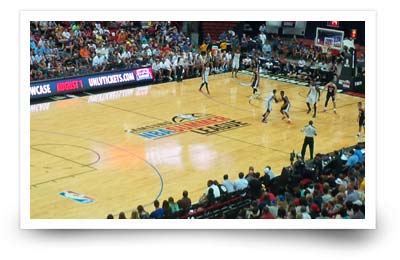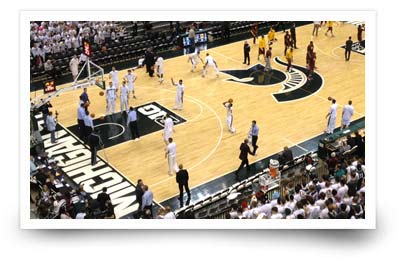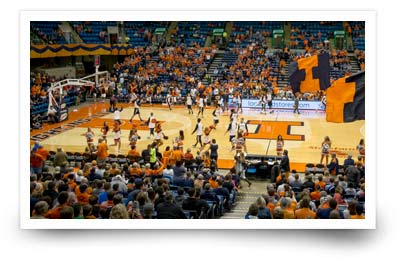
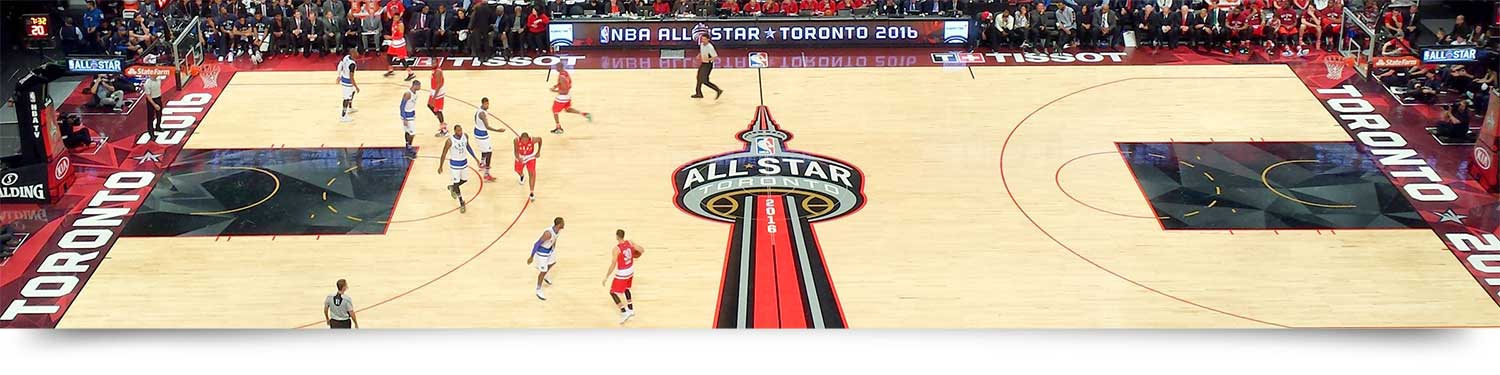
Horner Flooring offers a host of proven, time tested flooring systems to fit the various needs of diverse facility and organizational needs. Whether it's retro-fitting a new permanent floor into a nostalgic 80 year old gymnasium, placing a performance conscious DIN-certified system into a university's dedicated basketball practice complex, providing a state-of-the-art portable floor to be used in multiple sport, multiple use venues that have demanding set-up and take-down constraints or installing a synthetic surfacing options for special applications, there is a Horner floor to suit the situation.

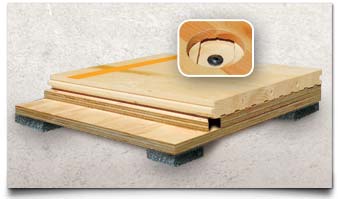
A Horner floor is more than just a high quality wood or synthetic surface, it's the specific and purposeful integration of a flooring system's component items, all manufactured to the highest of industry standards. Wood flooring systems primarily consist of the following: vapor retarder, fasteners, pads, sleepers, subfloor, and finally, the wood surface itself. Synthetic flooring systems primarily consist of: rubber basemat, pore sealer, structural coat, and finally, the top coat. Depending upon the specific performance needs and a facility's environmental, design, and economic constraints, specific flooring systems may be better suited that others. To aid architects, specifiers, and designers in making an initial selection flooring system most appropriate to their needs, we have provided: 1) a basic system-by-use comparison, 2) detailed 3 Part system specification documents, and 3) CAD drawings (wood systems only). As always, please feel free to contact Horner Flooring by e-mail or by phone at (800) 380-0119 if something isn't addressed at this web site or if additional assistance is required and one of our service representatives will be pleased to help in whatever way is needed.

Each of the floor systems are available in the following formats: Hypertext Mark-up Language (.html), Microsoft Word (.doc) and Adobe Acrobat (.pdf). Hardwood sports flooring systems also have two dimensional CAD* (.dxf or .dwg) drawing available as well. Respective Adobe Acrobat reader and CAD reader applications are available if they are not already resident on your computer.

* - Because of recent changes in some web browsers, clicking on a CAD link may result in the browser opening up the file and reading it as text instead of an image. If this happens, simply click on the brower's back button, right click on the CAD button for the desired sytem and select the Save Target As option, save the file to your computer, and then open it directly with your CAD software.


Fixed Systems Specifications

Fixed systems lock the flooring to the concrete subfloor, preventing undesirable shifting of the flooring system elements. These systems are generally used in high relative moisture environments, such as gymnasiums with older HVAC systems, where increased stability is required.

Sta-Loc System
CAD* | WORD | PDF

Sta-Loc II System
CAD* | WORD | PDF

Sta-Fast System
CAD* | WORD | PDF

Fixed Sleeper System
CAD* | WORD | PDF


Suspended Systems Specifications

Suspended systems are laid on a variety of cushioning materials that isolate the floor from the concrete subfloor to provide better sound absorption and biomechanical performance. Generally, these systems are used where relative moisture content is more properly controlled. Given the increased margin of resiliency and performance provided by these floors, these are some of Horner's most popular systems.


Thrust-A-Cushion Sleeper System
CAD* | WORD | PDF

Thrust-A-Cushion Sleeper Subfloor System
CAD* | WORD | PDF

Thrust-A-Cushion Panel System
CAD* | WORD | PDF

Vari-Cushion System
CAD* | WORD | PDF

All-Wood System
CAD* | WORD | PDF

All-Wood FR, FR-1 Systems
CAD* | WORD | PDF

SAFE™ Panel System
CAD* | WORD | PDF

SAFE™ All-Wood FR, FR-1 Systems
CAD* | WORD | PDF

SAFE™ Sleeper System
CAD* | WORD | PDF

SAFE™ Sleeper Subfloor System
CAD* | WORD | PDF

SAFE™ Resilient Fixed Sleeper System
CAD* | WORD | PDF

Sta-Fast II System
CAD* | WORD | PDF

Sta-Fast II SAFE™ System
CAD* | WORD | PDF

SAFE™ Laminated Sleeper Subfloor System
CAD* | WORD | PDF

Eco Laminated Sleeper Subfloor System
CAD* | WORD | PDF

Multipurpose Channel System
CAD* | WORD | PDF

Multipurpose Channel II System
CAD* | WORD | PDF


Din-Certified Systems

DIN-certified systems meet or exceed the DIN 18032 Part 2 standards for ball rebound, shock absorption, and deflection.


All-Wood ERS and ERS-R1 Energy Response Systems
CAD* | WORD | PDF

Balanced Performance System (BPS)
CAD* | WORD | PDF

Controlled Response and Performance (CRP) System
CAD* | WORD | PDF


Parquet Systems

Parquet systems are simple, economical systems in which hard maple flooring is bonded directly to a concrete subfloor or to one of our special subfloor designs.

 
MultiSport System
CAD* | WORD | PDF

MultiSport Ultra System
CAD* | WORD | PDF


Portable Systems

The Pro-King™ portable basketball systems are hard maple floors assembled from removable 4'x8' panels. Special locking hardware enables rapid assembly and disassembly, and holds the floor tightly together during play.

 
Pro-King Portable System
BROCHURE | INFO and SPEC PACKET


Synthetic Systems

Synthetic systems deliver versatile solutions that can fulfill any sports surface need. Options range from value priced systems all the way through Olympic level performance. With a variety of performance levels, costs, and environmentally conscious surfaces to choose from, Horner’s synthetic systems provide unbeatable sports flooring options.


CushionCourt System
WORD | PDF

EcoCourt System
WORD | PDF

AllCourt System
WORD | PDF

Olymp-X System
WORD | PDF

EcoTrack System
WORD | PDF

EcoTuff System
WORD | PDF

SuperTuff System
WORD | PDF

* - Because of recent changes in some web browsers, clicking on a CAD link may result in the browser opening up the file and reading it as text instead of an image. If this happens, simply click on the brower's back button, right click on the CAD button for the desired sytem and select the Save Target As option, save the file to your computer, and then open it directly with your CAD software.